Selling a House with Solar Panels in Raleigh, NC: A Seller’s Guide for 2026
The Triangle has seen a significant expansion in residential solar over the past five to seven years. Raleigh, Durham, Cary, and the surrounding suburbs have some of the highest rates of solar adoption in North Carolina — and that means more and more sellers are listing homes with solar panels.
Most of those sellers have no idea how their solar system will affect the transaction until their listing agent or the buyer’s lender asks a question they can’t answer.
Here’s what you need to know before you list.
The Only Question That Matters: How Did You Finance Your Panels?
Your experience selling with solar will be completely different depending on how your system was paid for. There are three scenarios, and they don’t work the same way.
Scenario 1: You own the system outright.
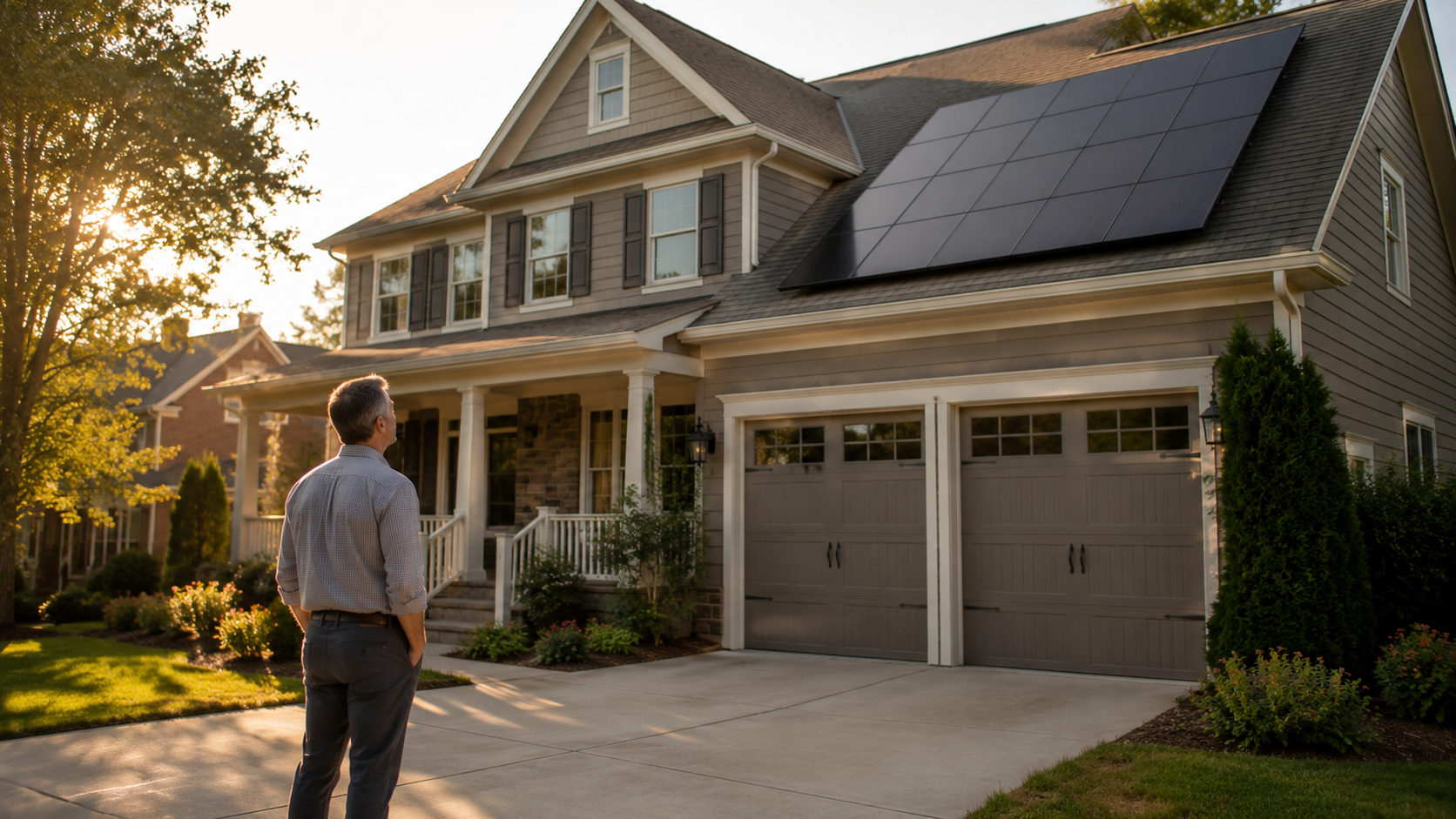
If you purchased your solar panels with cash or paid off your loan, you own them free and clear. The panels are a fixture of the home and transfer with it at closing. According to national data from the Lawrence Berkeley National Laboratory, owned solar systems can approximately 4.1% to median home value — which on a $500,000 Triangle home works out to roughly $20,000 in added value.
Buyer financing is generally not complicated by an owned system. The appraiser will value the panels as part of the home, and lenders treat them as they would any other permanent improvement. You’ll still need to document the system — installer, age, capacity, warranty, production data — and disclose it properly, but the transaction itself is straightforward.
Scenario 2: Your panels are leased or under a PPA.
A solar lease or Power Purchase Agreement (PPA) means the solar company still owns the panels. They’re on your roof, but they’re not yours to sell.
When you list the home, you have two options: find a buyer willing to assume the lease, or buy out the remaining lease before closing. Lease buyouts vary widely — anywhere from a few thousand dollars to tens of thousands depending on how much of the term remains.
Buyers assuming a solar lease have to qualify through the solar company, which adds a step to the transaction and can delay closing. Some buyers will walk away from a leased system rather than take it on. If you’re listing in a competitive price range — anything above $550,000 in Wake County, where buyers have more options than they did two years ago — a lease that the buyer can’t or won’t assume can become a real obstacle.
Contact your solar provider as soon as you decide to sell. Request the lease transfer packet and confirm the buyout amount. You need those numbers before you accept any offer.
Scenario 3: You financed your solar with a solar loan.
This is the scenario that creates the most complications for Triangle sellers, and it’s more common than most people realize.
When you take a solar loan, the lender often files a UCC-1 financing statement to secure their interest in the equipment. Unlike a traditional mortgage lien, a UCC-1 doesn’t appear in the county deed records — it’s filed with the NC Secretary of State’s office. Title companies and closing attorneys find these during the title search, but the process of clearing them is different from clearing a standard lien.
North Carolina is an attorney-closing state. When a UCC-1 lien is flagged, your closing attorney has to confirm who now holds the lien (especially if your solar company has been acquired or gone bankrupt — which has happened with several major Triangle-area installers since 2021), locate someone with authority to issue a termination, and get that termination properly recorded before the table. If your solar company is in bankruptcy proceedings, this can get complicated fast.
The NC REALTORS® has addressed this question directly: Is the seller required to pay off a loan on their solar panels? The short answer is that most conventional lenders will require the loan to be resolved at closing, whether by payoff from your proceeds or assumption by the buyer (if the lender allows it).
Many solar loan lenders don’t allow assumption at all. In that case, you’re paying off the balance from your sale proceeds — or negotiating with the buyer to cover part of it as a seller concession.
What You Have to Disclose on the NC Seller Disclosure Form
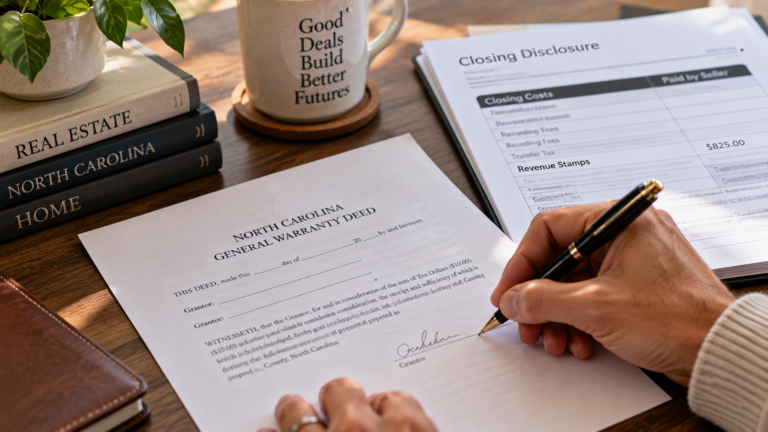
North Carolina’s Residential Property and Owner’s Association Disclosure Statement (RPOADS) requires sellers to disclose material facts about the property. Solar panels — and the financial arrangements attached to them — qualify.
You’re expected to disclose whether the system is owned or leased, whether there’s an existing loan or lien, and any relevant warranty or service agreements. If your solar company has gone out of business and the warranty is now uncertain, that’s a disclosure item.
Buyers have the right to inspect the system and review all documentation during the due diligence period. Building this into your pre-listing preparation saves time and reduces the chance of a surprised buyer walking during due diligence.
Appraisal and the Solar Value Question
Getting appraisal credit for your solar system isn’t automatic. Appraisers need comparable sales of homes with similar solar installations to support additional value. In the Triangle, those comparables are becoming more available as solar adoption grows, but your appraiser still needs to find them.
Do not assume than an appraiser or potential buyer will find value in your solar system. In my experience they are an immediate turnoff for a lot of buyers for a variety of reasons which I will discuss in a future blog entry.
A pre-listing inspection is worth considering if you have solar. Having a current system inspection in hand gives your listing credibility, and production data — showing actual kilowatt-hour output over the past year or two — gives buyers and appraisers something concrete to work with.
If your system is still under the original equipment warranty and the panels are performing at or above their rated output, that’s a selling point worth documenting.
What to Do Before You List
If you’re planning to sell a home with solar panels in the Triangle, here’s what to do before you talk to a listing agent:
- Locate all documentation. Find your original installation contract, financing agreement, warranty paperwork, and any transfer or assumption procedures.
- Confirm your ownership status. Check whether your loan is paid off, whether a UCC-1 was filed, and whether your solar company is still operating.
- Get a payoff figure. If you have an outstanding solar loan, get a payoff statement from the lender. You need to know this number before you negotiate an offer.
- Contact the solar company. If your system is leased, start the transfer conversation early. Some companies take weeks to process transfer packets.
- Pull your production data. Most inverter systems have online monitoring. Download the last 12 to 24 months of production data in a format you can share with buyers and their appraisers.
- Talk to your listing agent before you set a price. Solar may add value, but the method of financing and the local comparable sales both affect how much. An agent with experience in Triangle solar transactions can help you price accurately and prepare the home for buyer due diligence. Again, based on my experience, do not simply assume that an appraiser and/or potential buyers will find value in your solar system and equipment.
The sellers who have the smoothest closings are the ones who sorted out their solar situation at least 30 days before going to market — not the ones who discovered a UCC lien when the buyer’s lender flagged it two weeks before the closing date.
Your closing attorney will handle the resolution, but the earlier they have the information, the fewer delays you’ll face. You can get more detail on what to expect from the seller’s closing process in NC before your first listing conversation.
Frequently Asked Questions
Do solar panels increase home value in North Carolina?
Owned solar panels can add approximately 4.1% to a home’s median value, according to research from the Lawrence Berkeley National Laboratory. In the Triangle, where buyer familiarity with solar is increasing and Duke Energy rates make solar savings meaningful, owned systems are sometimes viewed positively by buyers. In my experience, they can also be an automatic turnoff for some buyers. Leased and financed systems are treated more cautiously because they come with obligations the buyer must assume or that must be resolved before closing.
Do I have to pay off my solar loan before selling my house in NC?
Most conventional lenders require any solar loan secured by a UCC-1 lien to be resolved before they’ll fund the buyer’s mortgage. You can pay it off from your sale proceeds at closing, or the buyer’s lender can require it be paid off as a condition of financing. Some solar lenders allow loan assumption, but many don’t. Your closing attorney will identify the lien during title search and coordinate the resolution under NC’s attorney-closing process.
Can my buyer take over my solar lease in NC?
Yes, in most cases a buyer can assume a solar lease, but it’s not automatic. The buyer must apply through the solar company and be approved, which adds a step to the transaction and can take several weeks. Some buyers won’t want the obligation, which can narrow your buyer pool. Contact your solar provider before listing to get the transfer packet and understand the timeline and any financial conditions involved.
What if my solar company went out of business?
This is more common than most sellers expect. If your solar company has closed or filed for bankruptcy, the warranty on the equipment may be limited or void. More critically, if there’s an outstanding loan or lien and the company no longer exists in its original form, your closing attorney needs to locate the successor entity or the trustee in bankruptcy to get a valid lien termination. Get your closing attorney involved early if this is your situation. The Pierce Law Group in NC has addressed complex solar lien scenarios specifically under North Carolina law.
Do I have to disclose my solar panels on the NC seller disclosure form?
Yes. The NC Residential Property and Owner’s Association Disclosure Statement (RPOADS) requires disclosure of material facts about the property, and the solar system — including its financing status, any liens, and any warranty issues — qualifies. Failing to disclose a known solar loan or lien that later surfaces at closing can create legal exposure. When in doubt, disclose.
Ready to List a Home with Solar?
Selling a home with solar panels in the Triangle isn’t complicated if you know what you’re working with. Owned systems are assets. Financed and leased systems require some preparation — but sellers who sort out the details before listing have smoother transactions and fewer surprises.
If you’re thinking about listing a Raleigh-area home with solar panels and want to walk through your specific situation, I’m happy to take a look. We can talk through what your system type means for your timeline, your pricing, and your buyer conversations — before any of it becomes a closing issue.
Email me at brandon@theoceanairerealty.com or call or text 910-228-6481 to schedule a confidential consultation.
About Brandon Yopp
Brandon Yopp is a top-producing REALTOR® with The Oceanaire Realty, serving sellers and buyers across Raleigh, Durham, Chapel Hill, Cary, Apex, and the surrounding Triangle communities in North Carolina. A Triangle resident for more than 20 years, Brandon is known for deep local market knowledge, strategic pricing, expert negotiation, and a marketing approach built to give sellers maximum exposure across the platforms today’s buyers actually use. He’s a multi-year Triangle Real Producers Top 500 honoree and a Certified Luxury Home Marketing Specialist™, guiding first-time buyers, upsizers, downsizers, relocating clients, and investors through the Triangle market with confidence. Over 90% of his business comes from repeat clients and referrals.