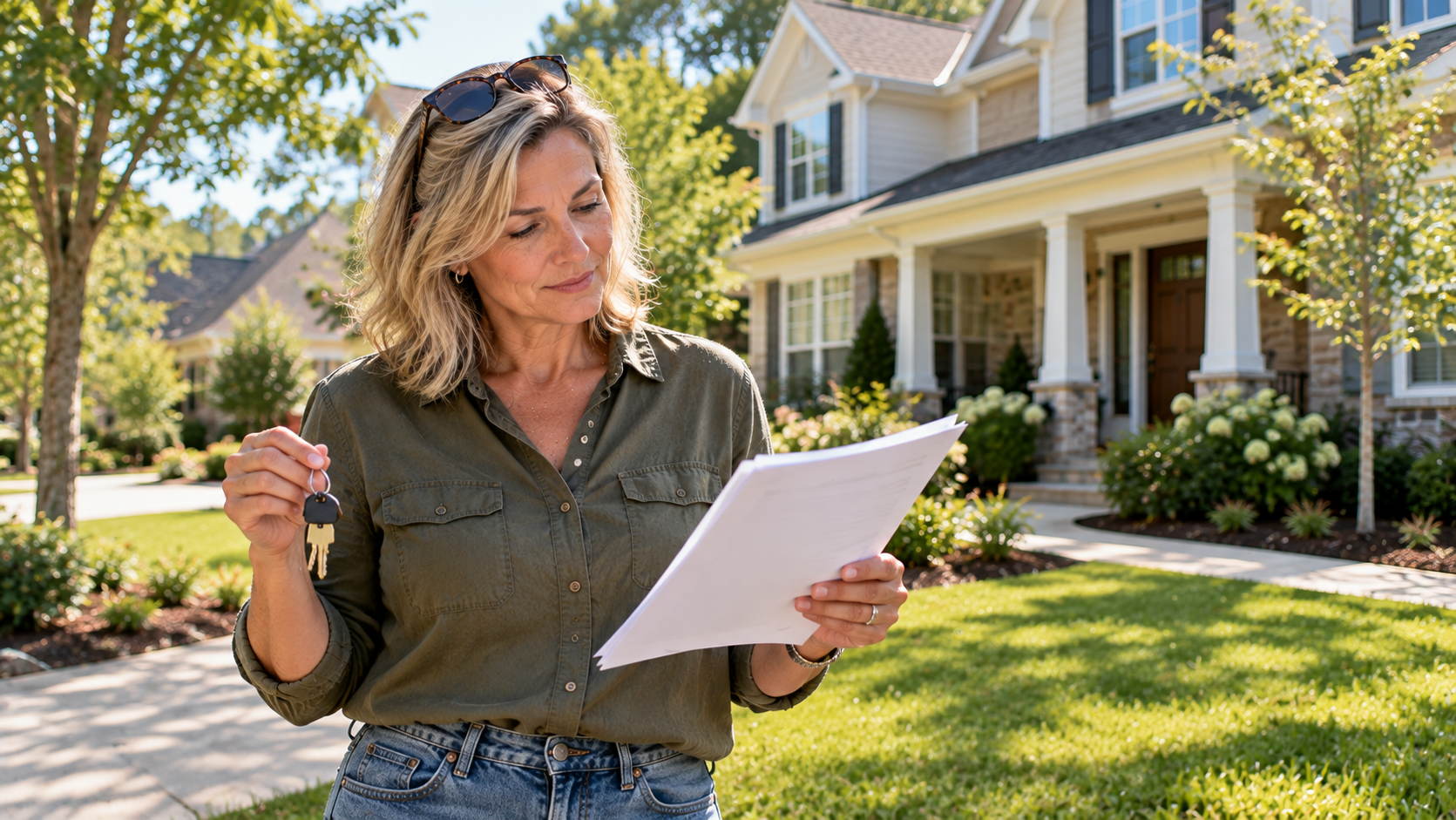
Should I Sell My House or Rent It Out in Raleigh, NC in 2026?
Several times a year I connect with someone asking for my advice as to whether or not they should rent a property and hold it as an investment or unload it. In fact it’s one of the most common questions I hear from Raleigh homeowners who are thinking about moving but still feel the pull of their property. Especially if you bought or refinanced at 3% or 4%, the thought of keeping that home as a rental — and letting someone else pay the mortgage — feels like a smart play.
Sometimes it is. Often it isn’t. The difference comes down to a few numbers that most homeowners haven’t run yet.
The Rental Math in Raleigh Right Now
As of mid-2026, the median monthly rent for a single-family home in the Raleigh-Durham metro is around $2,026 to $2,180 depending on size and location. A three-bedroom home in Cary or Apex can command $2,200 to $2,600 per month in the current market. That’s the gross number — the one that looks good on paper.
Here’s what comes out of it:
- Mortgage PITI (principal, interest, taxes, insurance): whatever your current payment is
- Property management if you’re not self-managing: 8-12% of gross rent
- Vacancy: industry standard is one month per year (approximately 8% of gross)
- Maintenance and capital reserves: 1-2% of property value per year
- Landlord insurance: typically 15-25% higher than your current homeowner policy
- Potential loss of homestead property tax exemption
Run those numbers against your rent figure. If you’re netting less than $150 to $200 per month positive cash flow, you’re not really a landlord — you’re subsidizing a tenant to live in your house. That might still make sense as a long-term wealth strategy, but it’s a very different proposition than the simple picture of “rent covers the mortgage.”
The Tax Window That Closes When You Move Out
This is the piece that catches Raleigh sellers off guard, and it matters a lot.
Under Section 121 of the federal tax code, when you sell your primary residence you can exclude up to $250,000 of capital gain from taxes if you’re single, or up to $500,000 if you’re married filing jointly. To qualify, you need to have owned and lived in the home for at least 24 of the last 60 months.
Here’s the catch: the moment you convert your home to a rental, the clock starts running on that exclusion. Move out, rent it for three years, then sell — and you’ve lost the protection unless you move back in. North Carolina follows the federal exclusion, so excluded gains avoid both federal capital gains tax and NC’s flat 3.99% state rate. Learn more about how capital gains tax works for NC home sellers.
On a Triangle home that’s appreciated from $400,000 to $600,000, that exclusion is the difference between owing nothing on a $200,000 gain and owing $30,000 or more depending on your federal bracket.
Before you decide to rent instead of sell, ask your CPA: “How does this decision affect my Section 121 exclusion?” The answer should be part of your analysis.
What Renting Actually Requires
I’ve seen a lot of primary-residence owners become accidental landlords — and struggle. Here’s what being a landlord in NC actually looks like:
You’re responsible for habitability under NC G.S. Chapter 42 (the NC Residential Rental Agreements Act). That means working heat, water, and a structurally sound property — always, not just when it’s convenient.
You need to qualify for a new mortgage on your next home while carrying the existing one. Many homeowners are surprised to learn their lender will only count 75% of projected rental income to offset the existing payment — and some won’t count it at all until you have a signed lease and 12 to 24 months of landlord history.
Tenants break things. HVAC units fail. Roofs fail. A $12,000 HVAC replacement or a $20,000 roof in year two of a rental can wipe out years of positive cash flow.
Self-managing is a second job. Hiring a property manager costs 8-12% of gross rent — in Raleigh’s market, that’s $175 to $270 per month on a $2,180 rental.
None of this means don’t do it. It means go in with clear eyes.
When Selling Makes More Sense
Selling is usually the better path if:
- Your rent won’t cover all expenses after a realistic expense model
- You’d lose a significant Section 121 exclusion by renting first and selling later
- You need the equity for a down payment on your next home and can’t carry both mortgages
- You’re not financially or emotionally prepared for the realities of being a landlord
- Days on market in your neighborhood are rising and you’re unsure about future price appreciation
Wake County’s median sale price was $440,000 in July 2026, and active inventory is up more than 20% year-over-year. To understand what you’d actually net from a sale in today’s market, see how much Triangle sellers net after closing.
When Renting Makes Sense
There are situations where holding makes real financial sense:
- You have a sub-4% mortgage and the property generates genuine positive cash flow after all expenses
- You’re moving temporarily and plan to return within two to three years
- The property is in a high-appreciation submarket where long-term gains outweigh the tax cost
- You have strong cash reserves and actually want to own rental property as part of your investment strategy
If rate lock-in is a big part of why you’re hesitating, this post breaks down that specific decision: Should I Sell My House If I Have a 3% Mortgage?
And if you do eventually rent the property and then need to sell with a tenant in place, here’s what that situation looks like: Selling a Tenant-Occupied Property in Raleigh NC.
I can’t tell you the right answer for your specific house without running the actual numbers with you. What I can tell you is that most homeowners who rent “for now” find themselves holding longer than planned, losing their exclusion window, and selling in a tax situation they didn’t expect. That’s not a reason to never rent — it’s a reason to make the decision deliberately, with the numbers in front of you.
If you’re weighing this and want to model it out, reach out for a confidential consultation. Email me at brandon@theoceanairerealty.com or call or text 910-228-6481 and we’ll find a time that works.
Frequently Asked Questions
Can I rent out my house in Raleigh and still qualify for the capital gains exclusion when I sell later?
Yes, but only if you re-establish it as your primary residence before selling. Under Section 121, you need to have lived in the home for at least 24 of the last 60 months before the sale date. If you rent it out for more than three years without moving back in, you’ll lose the exclusion — or reduce it proportionally. Talk to a CPA before making this decision.
How much can I realistically rent my Raleigh home for in 2026?
A three-bedroom single-family home in Wake County is renting for a median of around $2,026 per month as of mid-2026, with homes in Cary, Apex, and North Hills reaching $2,400 to $2,800. That’s the gross figure — after mortgage, management, vacancy, and reserves, most homeowners net significantly less.
Will my lender let me buy another home if I keep my current one as a rental?
Possibly, but it’s harder than most people expect. Conventional lenders typically require a signed lease and may count only 75% of projected rental income to offset your existing payment when calculating your debt-to-income ratio. Some lenders require 12 to 24 months of landlord history before counting rental income at all. Talk to a lender before assuming you can carry both.
What are my obligations as a landlord under NC law?
Under NC G.S. Chapter 42, you’re required to maintain a habitable property — working heat, running water, structural soundness, functioning locks, and freedom from significant pest infestations. Failure to maintain these standards can expose you to rent withholding, lease termination, and potential legal liability.
Is the Raleigh rental market still strong in 2026?
Demand is solid — Raleigh continues to attract new residents. But rental rates have softened slightly year-over-year in 2026, with the average rent in Raleigh around $1,729 per month across all property types. Single-family homes command more, but competition from new apartment supply and investor rentals means you shouldn’t assume maximum rents without researching your specific neighborhood. See Doorstead’s Raleigh-Durham Rental Market Report for current data.
About Brandon Yopp
Brandon Yopp is a top-producing REALTOR® with The Oceanaire Realty, serving sellers and buyers across Raleigh, Durham, Chapel Hill, Cary, Apex, and the surrounding Triangle communities in North Carolina. A Triangle resident for more than 20 years, Brandon is known for deep local market knowledge, strategic pricing, expert negotiation, and a marketing approach built to give sellers maximum exposure across the platforms today’s buyers actually use. He’s a multi-year Triangle Real Producers Top 500 honoree and a Certified Luxury Home Marketing Specialist™, guiding first-time buyers, upsizers, downsizers, relocating clients, and investors through the Triangle market with confidence. Over 90% of his business comes from repeat clients and referrals.