
What Happens After Your Offer Is Accepted in North Carolina?
Most buyers feel a burst of excitement the moment they hear their offer was accepted. Then, about 20 minutes later, the questions start.
What do I do first? How long do I have? Who do I call? What happens if something goes wrong?
The under-contract period in North Carolina is busier and more structured than most buyers expect, especially buyers relocating from states that use contingency-based contracts. NC does things differently, and understanding the timeline before you’re in it makes everything calmer and more strategic.
Here is what happens, in order, from contract ratification to closing day.
The Moment Your Contract Is Ratified
In North Carolina, your contract becomes binding when both parties have signed and the last signature is communicated to the other side. That moment is called ratification, and it starts the clock on every deadline in your contract.
Your agent will confirm three dates immediately: the Due Diligence Period deadline, the closing date, and any financing deadline if your contract includes one. Write these down. Missing the Due Diligence deadline is not a technicality you can recover from.
Within one to three business days of ratification, you will typically need to deliver two payments:
The Due Diligence Fee is a non-refundable payment made directly to the seller, usually by personal check, bank check, or wire. It is the price of the Due Diligence Period itself. In exchange, you get the right to investigate the property and walk away for any reason before the deadline, without losing your earnest money. If you close on the home, both the Due Diligence and Earnest Money count toward your purchase price. If you walk away, the seller keeps it. The amount is negotiated in your contract and has ranged from a few thousand to five figures-plus in the current Triangle market, depending on competition and price point.
Earnest money goes to the closing attorney or escrow agent. Unlike the Due Diligence Fee, your earnest money is refundable if you terminate during the Due Diligence Period. If you terminate after the Due Diligence deadline for a reason not covered by your contract, the seller may be entitled to keep it. The amounts and timelines are specified in your contract, so your agent will confirm exactly when and where both payments are due.
For a deeper breakdown of how these two payments work, the NC Due Diligence Fee guide covers it in full. Note that the new construction process is slightly different than the resale process.
The Due Diligence Period: Your Investigation Window
The Due Diligence Period is North Carolina’s version of buyer protection. During this window, typically 14 to 21 days depending on what you negotiated, you can investigate the property and terminate the contract for any reason or no reason. You do not have to prove the home has a problem. You just have to terminate before the deadline.
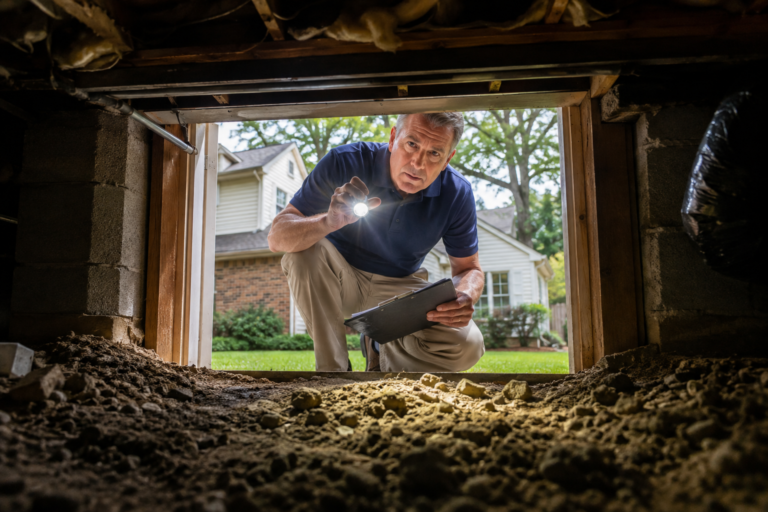
This is the period when you schedule your home inspection. Do not wait. Most inspectors in the Triangle are booking out a week or more, and you need time to review the report, order any follow-up inspections, and make decisions before your deadline.
A standard home inspection covers the structure, roof, HVAC systems, plumbing, electrical, and visible components. Depending on what your inspector finds, you may also want to bring in specialists for:
- Radon testing (common in the Triangle, especially in homes with basements or crawl spaces)
- Crawl space evaluation or moisture inspection
- HVAC service report if the system is older
- Structural engineer if there are foundation concerns
- Sewer scope if the home is older or if the inspector flagged drainage issues
- Septic inspection if the home is on a private system
Each of these is a separate cost, and the scheduling logistics take time. Starting inspections in the first 48 to 72 hours of your Due Diligence Period gives you room to react.
After inspections, you have two main options. First, you can request repairs or a credit. In North Carolina, sellers are not required to fix anything. The home is sold as-is under NC law. What you can do is negotiate. Your agent will help you identify which issues are worth raising and structure a Due Diligence Request and Agreement (DDRA) if you are asking for repairs or a credit. The seller can agree, counter, or decline. If you cannot reach an agreement and the issue is significant, you can terminate before the deadline and get your earnest money back.
Second, you can walk away entirely. If inspections reveal something you cannot accept, or if you simply change your mind for any reason, you can terminate before the Due Diligence deadline and recover your earnest money. The Due Diligence Fee is gone if you back out regardless of the reason.
Financing and Appraisal
While inspections are underway, your lender is processing your loan. Within three business days of ratification, your lender is required to provide a Loan Estimate that outlines your projected costs and terms. Review it carefully.
Your lender will order an appraisal, typically within the first week after going under contract. The appraiser is an independent licensed professional hired by your lender, not by your agent or the seller. Their job is to confirm that the home’s market value supports the loan amount. The appraisal report takes several business days to complete after the appraiser visits the property.
If the appraisal comes in at or above the purchase price, this step is complete. If it comes in below the purchase price, you have decisions to make. You may be able to renegotiate the price with the seller, cover the gap with additional cash, request a reconsideration of value from the appraiser with supporting comparable sales, or, if your contract includes an appraisal contingency, potentially terminate.
This is worth planning for in advance. In the current Triangle market, most resale transactions at fair market value appraise successfully. But if you paid significantly above list price on a property in a neighborhood with limited comparable sales, your agent should walk you through the appraisal risk before you go under contract.
Your lender will also ask you for updated documentation as the loan processes, including bank statements, pay stubs, and explanations for any recent account activity. Respond quickly. Any delay in documentation can push your closing date.
Title Work and the Closing Attorney
North Carolina is an attorney-closing state. A licensed real estate attorney must handle every residential closing, and the attorney coordinates title search, settlement, and recording for your transaction.
Once you are under contract, the closing attorney begins the title search: a review of the property’s ownership history to confirm the seller has clear, transferable title and there are no liens, judgments, or encumbrances that would survive the sale. This process takes one to two weeks in a standard transaction.
The attorney also coordinates with your lender to receive loan documents, prepares the closing statement (called the Closing Disclosure), and handles the disbursement of funds at closing. For a breakdown of what the attorney fee and related costs include, the buyer closing costs guide for the Triangle has the full breakdown.
You will receive your Closing Disclosure at least three business days before closing. Review it carefully and compare it to your original Loan Estimate. If anything has changed significantly, ask your lender for an explanation before closing day.
Final Walkthrough
One to three days before closing, you will do a final walkthrough of the property. This is not a second inspection. It is a confirmation that:
- The home is in substantially the same, or better, condition as when you made your offer
- Any repairs agreed to in the DDRA have been completed
- The seller has removed their belongings (unless otherwise agreed)
- Fixtures, appliances, and anything included in the sale are still present
If something has changed for the worse, or agreed repairs were not made, this is the time to raise it with your agent, not after you have signed closing documents. As a standard procedure, I coordinate the final walkthrough for all of my buyer clients on the same day as closing, and we visit the property immediately before going to the attorney to sign the final closing documents.
Closing Day
On closing day, you will sign a significant amount of paperwork, including your mortgage note, deed of trust, and closing disclosure, at the closing attorney’s office. Plan for one hour for this process.
You will need to bring a government-issued photo ID and your certified funds for closing, typically wired in advance or in the form of a cashier’s check, depending on the attorney’s instructions. Wire your funds at least 24 hours early. Same-day wires can cause delays that push your closing to the next business day.
After all documents are signed and funds are disbursed, the attorney submits the deed and deed of trust to the county Register of Deeds for recording. Keys are typically exchanged after recording is confirmed, often later in the afternoon. Your agent will coordinate with the listing agent on timing.
Frequently Asked Questions
How long does the under-contract period last in North Carolina?
Most Triangle transactions close 30 to 45 days after contract ratification. The exact timeline depends on the closing date negotiated in your contract, your lender’s processing time, and the complexity of the title search. Cash transactions can sometimes close in as few as two to three weeks if the parties agree.
Can I back out after my offer is accepted in North Carolina?
Yes, during the Due Diligence Period, you can terminate the contract for any reason and receive your earnest money back. The Due Diligence Fee is non-refundable in all cases. After the Due Diligence deadline, terminating the contract without a contractually valid reason puts your earnest money at risk.
Does the seller have to make repairs after the home inspection in NC?
No. North Carolina is a buyer-beware state and all homes are sold as-is under the standard contract. Sellers are not obligated to make any repairs. However, buyers can request repairs or credits through a Due Diligence Request and Agreement (DDRA), and sellers often agree to something reasonable rather than risk the buyer walking away. Whether and how much to request depends on the issues found and the market conditions.
When do I need to have homeowners insurance in place?
Your lender will require proof of homeowners insurance before closing. Most lenders need the binder, or confirmation of coverage, at least three to five business days before your closing date. Start shopping for insurance shortly after going under contract so you are not scrambling in the final days.
What happens at the closing attorney’s office in NC?
You sign your mortgage and closing documents with the closing attorney, who oversees the disbursement of funds to the seller, your lender, and any other parties. The attorney then records the deed and deed of trust with the county Register of Deeds. You receive keys after recording is confirmed, typically later on the same day.
What is the Closing Disclosure and when do I get it?
The Closing Disclosure is the final accounting of all your loan terms and closing costs. Federal law requires your lender to provide it at least three business days before closing. Review it carefully and compare it line by line to your Loan Estimate. If anything has changed significantly, ask your lender before you sit down at the closing table.
Can the closing date be moved?
Yes, closing dates can be moved by mutual agreement of both parties. Common reasons include lender delays, title issues, or scheduling conflicts. Your contract specifies a closing date, but with both parties’ written agreement, it can be adjusted. If the seller or buyer needs to extend the closing date unilaterally, there may be contract implications, so talk to your agent before making any assumptions.
The under-contract period moves fast. Having an agent who knows the NC process and stays ahead of each deadline is what separates a smooth closing from a stressful one. If you are preparing to make your first offer in the Triangle I am happy to walk through the timeline with you.
Reach out for a confidential consultation anytime. Email me at brandon@theoceanairerealty.com or call or text 910-228-6481 and we will find a time that works.
About Brandon Yopp
Brandon Yopp is a top-producing REALTOR® with The Oceanaire Realty, serving sellers and buyers across Raleigh, Durham, Chapel Hill, Cary, Apex, and the surrounding Triangle communities in North Carolina. A Triangle resident for more than 20 years, Brandon is known for deep local market knowledge, strategic pricing, expert negotiation, and a marketing approach built to give sellers maximum exposure across the platforms today’s buyers actually use. He’s a multi-year Triangle Real Producers Top 500 honoree and a Certified Luxury Home Marketing Specialist™, guiding first-time buyers, upsizers, downsizers, relocating clients, and investors through the Triangle market with confidence. Over 90% of his business comes from repeat clients and referrals.