Title Insurance in Raleigh, NC: What Buyers Need to Know and What It Actually Costs in 2026
Title insurance is one of the line items on the closing disclosure that buyers often skip past. It shows up as a fixed cost, carries no premium variance between companies (because NC files its rates with the state), and does not protect against anything that seems immediately real or pressing when you’re focused on getting your keys.
But title insurance is also the one cost at closing that could save you from losing your home entirely. And in North Carolina, the way it works — and what it costs — is specific enough to the state that most general buyer guides get it wrong.
Here is what the title insurance line on your closing disclosure actually means, how the NC process differs from what you may have read elsewhere, what coverage you’re getting and not getting, and how to decide whether the owner’s policy is worth it.
How NC’s Attorney-Closing State Status Changes the Title Process
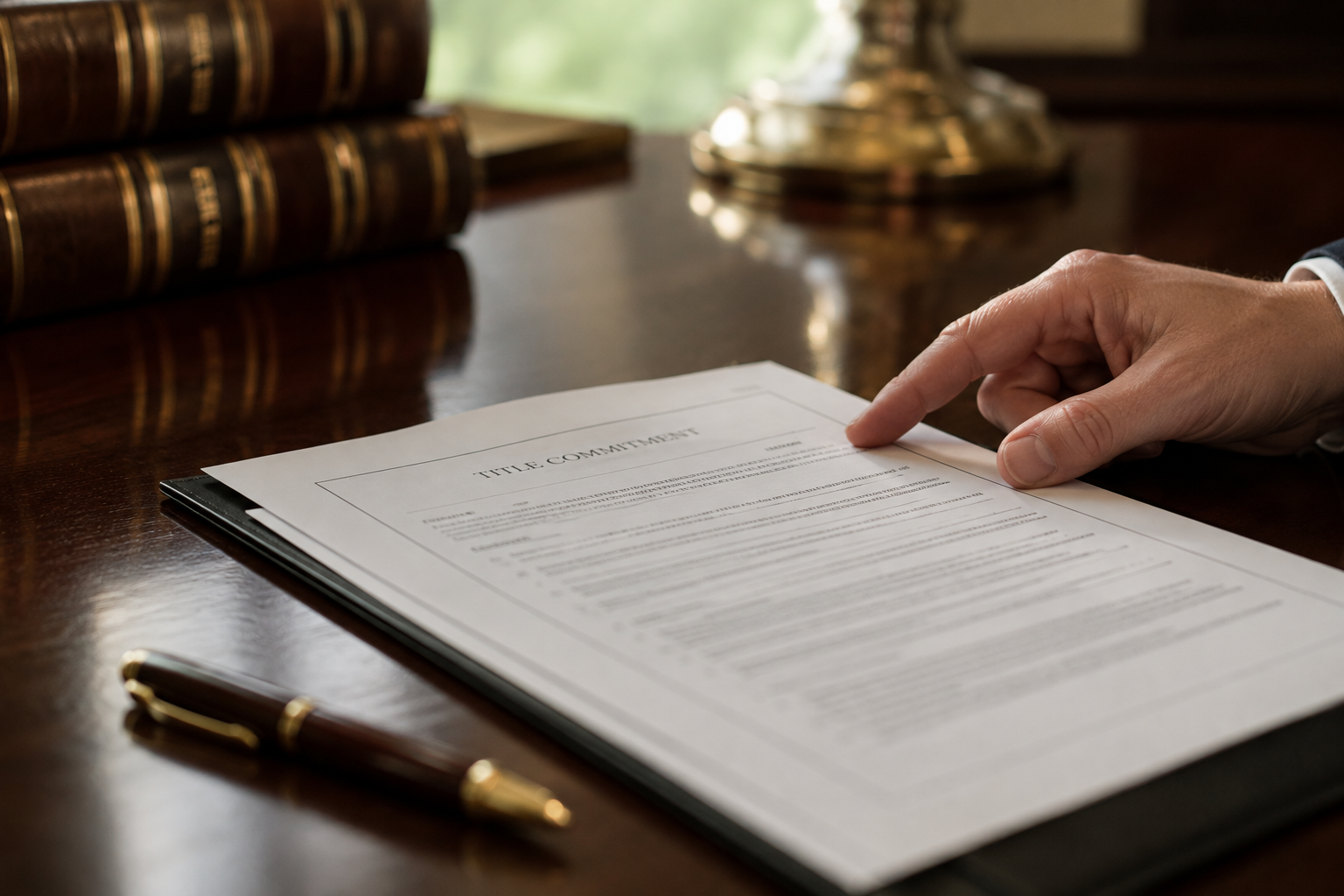
In most states, a title company performs the title search, issues a title commitment, and handles the closing. North Carolina is one of a minority of states that require a licensed attorney to close every residential real estate transaction. The closing attorney — typically chosen by the buyer under Form 2-T Paragraph 4(d) — performs or orders the title search, reviews the results, identifies any title defects or encumbrances, and issues an attorney’s opinion of title before any title insurance policy is issued.
This matters for buyers because the quality of the title search in NC is tied to the attorney doing the work, not a national title company’s standardized process. A thorough attorney examines courthouse records, deed books, tax records, and UCC filings going back the required chain — typically 30 years for residential property in Wake County, though the full search period varies by county and property.
The title insurance policy that follows is underwritten by a national insurer (typically one of four companies that dominate the NC market: Attorneys Title, Chicago Title, Fidelity National, or Old Republic). The attorney serves as the insurer’s closing agent.
What the Lender’s Policy Covers — and What It Doesn’t
If you’re using a mortgage to buy your home, your lender requires a lender’s title insurance policy. The lender’s policy protects the lender’s interest in the property — the outstanding loan balance — against title defects that arise after closing.
Here is the critical limitation: the lender’s policy covers the lender. It does not cover you.
If a previously undisclosed lien surfaces three years after you close — say, a contractor’s claim from the prior owner’s renovation that was never properly released — the lender’s policy may protect the bank’s interest in the property, but your equity is at risk. Depending on the nature of the claim, you may be responsible for satisfying the lien to protect your ownership. The NC Department of Insurance oversees title insurance regulation in the state and publishes consumer guidance on what each policy type covers.
What Owner’s Title Insurance Adds
Owner’s title insurance covers the buyer’s interest in the property — up to the purchase price — for as long as you own the home and, in most policy forms, for claims that arise afterward affecting the period you owned the property.
Covered risks typically include:
- Forgery or fraud in prior deeds
- Errors in recording or indexing prior transactions
- Undisclosed heirs with a claim on the property
- Liens or encumbrances not discovered during the title search
- Boundary disputes arising from prior surveys
- Improper release of a prior mortgage
Owner’s title insurance does not cover physical damage to the property, environmental hazards, zoning violations arising after you purchase, or claims arising from events that occur after closing. For a full explanation of what each policy type includes, the NC State Bar’s consumer resources on real estate closings describe how the attorney-title process works in practice.
What Title Insurance Actually Costs in North Carolina
This is where NC differs from nearly every other state: title insurance premiums are filed with and approved by the NC Department of Insurance. Every title insurer in North Carolina charges the same rate. There is no shopping around for a better price.
The NC state-filed rate structure for owner’s title insurance:
- First $100,000 of coverage: $2.54 per $1,000
- $100,001 to $500,000 of coverage: $1.98 per $1,000
- Above $500,000: $1.55 per $1,000
For a $500,000 home purchase, the owner’s policy premium works out to approximately $1,050.
The lender’s policy is priced the same way but is based on the loan amount rather than the purchase price. On a $400,000 loan (80% of a $500,000 purchase), the lender’s policy runs approximately $840.
The simultaneous issue discount — why the owner’s policy is almost always worth it
When an owner’s policy and a lender’s policy are issued at the same closing, NC’s rate structure provides a simultaneous issue credit. Rather than paying the full premium for both policies, buyers pay the full lender’s policy premium plus a sharply discounted rate for the owner’s policy — typically around $28 to $30 in additional premium at most price points.
This means that for a $500,000 purchase with a $400,000 loan:
- Lender’s policy only: approximately $840
- Lender’s policy + owner’s policy simultaneously: approximately $868
The simultaneous issue credit reduces the effective cost of lifetime ownership protection to the price of a dinner out. Buyers who decline the owner’s policy to save money are leaving lifetime protection behind for less than thirty dollars.
The buyer closing costs guide for Triangle purchases covers all of the closing cost line items in detail, including how title insurance appears on the Loan Estimate and Closing Disclosure.
Who Pays for Title Insurance in NC
The allocation of title insurance costs is negotiable in North Carolina. The contract default under Form 2-T is that the buyer pays for both policies — the lender’s policy (required) and the owner’s policy (if elected). In practice, this is often negotiated as part of the offer or counter-offer, particularly when sellers are competing for buyers or when the buyer is asking for other concessions.
Some sellers agree to pay the owner’s policy premium as a concession — particularly in slower segments of the market or for higher-priced properties where the premium is larger. This is less common than it once was but remains a viable negotiating point.
Because NC’s simultaneous issue discount makes the owner’s policy so inexpensive, most agents advise buyers to elect it and pay the nominal additional cost rather than asking sellers to cover it as a concession point.
For buyers navigating the offer structure and what to ask for in the contract, the what happens after your offer is accepted guide walks through the full timeline from contract to closing, including the title search and commitment process.
When Title Issues Actually Come Up
Title insurance claims are rare. The attorney’s title search process in NC is thorough, and the vast majority of residential closings proceed without any title defect discovered. But rare does not mean never.
Common title claim scenarios in NC residential transactions include:
Prior unreleased mortgages. An older mortgage from a refinance or second lien that was paid off but never formally discharged in the deed records. The payoff was made but the release was never recorded. The new buyer’s title search discovers the open lien; the attorney coordinates the release before closing. This is discovered and resolved pre-closing far more often than it becomes a post-closing claim — but when the prior lender is no longer operating or records are lost, resolution can take time and legal fees.
Heir or estate claims. A property that changed hands through a will or intestate succession where not all potential heirs were identified. This is more common with older properties and estate sales. The NC closing attorney’s title search includes examination of estate records when ownership has passed through an estate.
Survey errors in older properties. Boundary encroachments from prior surveys that were never corrected in the deed language. These surface most commonly when a neighbor undertakes a new survey or when a new structure is built near a boundary line.
Recording errors. Prior deeds or releases filed in the wrong index or with errors in the legal description. These are correctable in most cases, but correction takes attorney time and court filings in some instances.
The closing timeline guide covers the full NC closing process from contract to keys, including when the title search happens and what the commitment process looks like before your closing date.
One-Time Premium, Lifetime Coverage
Owner’s title insurance is a one-time premium paid at closing. There are no annual renewals, no ongoing payments, and no coverage lapses as long as you own the property. The coverage protects you for the full purchase price of the home for as long as you hold title.
If you later sell the home and the buyer’s title search uncovers a defect that traces to your period of ownership, your owner’s policy may still respond to that claim depending on its terms.
For a line item that protects an asset worth hundreds of thousands of dollars with a one-time payment of roughly $1,000 — reduced to about $30 in incremental cost when issued simultaneously with the required lender’s policy — the owner’s policy is one of the least debated recommendations in a Triangle home purchase. The question is almost never whether to get it. The question is understanding what you’re paying for.
For first-time buyers working through all the pieces of a Triangle purchase, the NC due diligence fee guide covers the due diligence fee and earnest money structure — the other NC-specific cost most buyers have questions about.
Frequently Asked Questions
Is owner’s title insurance required in North Carolina?
No. Owner’s title insurance is optional for buyers in NC. The lender’s title insurance policy is required for any financed purchase, but the owner’s policy — which covers the buyer’s equity rather than the lender’s interest — is the buyer’s choice. Given NC’s simultaneous issue discount, adding the owner’s policy at closing typically costs around $28 to $30 in additional premium on top of what is already paid for the lender’s policy. Most Triangle buyers elect the owner’s policy for this reason.
Who does the title search in North Carolina?
A licensed closing attorney performs or supervises the title search in every NC residential transaction. North Carolina is an attorney-closing state, which means a licensed NC attorney — not a title company — is required to handle the closing. The attorney examines deed records, tax records, and courthouse filings to verify clear chain of title, then issues a title opinion that supports the issuance of a title insurance policy. The buyer typically selects the closing attorney under Form 2-T Paragraph 4(d).
How is title insurance priced in North Carolina?
Title insurance rates in NC are filed with and approved by the NC Department of Insurance — every licensed insurer charges the same rate. There is no price competition between title insurance providers in NC. The standard owner’s policy rate is $2.54 per $1,000 of coverage for the first $100,000, then $1.98 per $1,000 for coverage between $100,001 and $500,000. When the owner’s and lender’s policies are issued at the same closing, a simultaneous issue discount applies, typically reducing the incremental owner’s policy cost to approximately $28 to $30.
What does title insurance not cover in NC?
Owner’s title insurance covers defects in the chain of title that existed before or at the time of your purchase — including liens, fraud, forgery, undisclosed heirs, and recording errors. It does not cover physical damage to the property, environmental issues, zoning changes that occur after closing, HOA violations, or defects that arise from events after you take ownership. It also does not substitute for a survey — boundary disputes arising from conditions visible on a current survey may not be covered without a survey endorsement.
Can the seller pay for title insurance in North Carolina?
Yes. Title insurance cost allocation is negotiable. Form 2-T defaults to the buyer paying both the lender’s and owner’s policy premiums, but sellers can agree to cover the owner’s policy premium as part of the negotiated terms. This is sometimes included in broader seller concessions packages, particularly in price ranges where buyers are requesting closing cost assistance. Because the simultaneous issue discount makes the owner’s policy so inexpensive, most buyers find it simpler to pay for it themselves rather than using it as a negotiating point.
Understanding what title insurance covers — and what it costs in NC specifically — gives you one less thing to wonder about when you’re reviewing your Loan Estimate and Closing Disclosure. If you have questions about the full cost picture of buying a home in the Raleigh area, or want to talk through your purchase timeline and budget, email brandon@theoceanairerealty.com or call or text 910-228-6481.
About Brandon Yopp
Brandon Yopp is a top-producing REALTOR® with The Oceanaire Realty, serving sellers and buyers across Raleigh, Durham, Chapel Hill, Cary, Apex, and the surrounding Triangle communities in North Carolina. A Triangle resident for more than 20 years, Brandon is known for deep local market knowledge, strategic pricing, expert negotiation, and a marketing approach built to give sellers maximum exposure across the platforms today’s buyers actually use. He’s a multi-year Triangle Real Producers Top 500 honoree and a Certified Luxury Home Marketing Specialist™, guiding first-time buyers, upsizers, downsizers, relocating clients, and investors through the Triangle market with confidence. Over 90% of his business comes from repeat clients and referrals.