Buying New Construction in the Triangle: A 2026 Buyer’s Guide
New construction is having a moment in the Triangle. Builders in Wake, Johnston, and Chatham counties are pushing hard to move inventory, offering incentive packages that weren’t available a year ago. WRAL reported in February 2026 that new builds are booming across the region, and buyers who know what they’re doing are getting real value. Buyers who don’t are leaving money on the table or, worse, signing contracts they don’t fully understand.
I’ve walked buyers through new construction purchases across the Triangle for years. The most common mistake isn’t picking the wrong floor plan or overpaying for granite countertops. It’s not understanding who the people in that model home actually work for.
The Builder’s Agent Works for the Builder. Not for You.
When you walk into a model home or a builder’s sales office, the person who greets you is the builder’s sales representative. They may be friendly, knowledgeable, and genuinely helpful. They are not your agent.
In North Carolina, the builder’s on-site representative has a fiduciary duty to the builder. Their job is to get the best contract terms for the company they work for. In many cases, they aren’t even licensed NCREC real estate brokers. They may be employees of the builder rather than independent licensed agents, which means the NC Real Estate Commission’s requirements around buyer representation don’t apply to them the same way.
This matters for a few specific reasons:
- The builder’s rep won’t push back on contract terms that favor the builder
- They won’t flag clauses you should negotiate or remove
- They won’t advise you on the gap between what the builder is asking and what the home is worth in the current market
- They won’t recommend independent inspections that might surface issues the builder would rather address quietly
Bringing your own buyer’s agent costs you nothing extra. Triangle builders understand how real estate works, and they almost always build buyer’s agent commissions into their pricing. Your representation is covered. The only thing that changes when you bring your own agent is who’s looking out for your interests.
One critical rule: bring your agent before you visit any new construction community or model home for the first time. Builders register buyer representation at initial contact. If you walk in unrepresented and then try to bring an agent later, the builder may not honor that representation, and you’ll be on your own through the entire transaction.
Understanding Builder Incentives in the Triangle Right Now
The 2026 market is genuinely good for new construction buyers who know how to work it. With 47% of Triangle resale closings now carrying seller concessions (per March 2026 MLS data from WRAL), builders are competing hard. Here’s what’s currently on the table across Wake, Johnston, and Chatham counties:
Rate buydowns. The most common incentive right now is a 2-1 buydown, which reduces your interest rate by 2% in year one and 1% in year two. On a $600,000 home with a 6.5% note rate, a 2-1 buydown means you’re paying 4.5% in year one, 5.5% in year two, and then your full rate in year three onward. Over the first two years, that’s a meaningful reduction in monthly payment.
Closing cost credits. Many Triangle builders are currently offering $5,000 to $10,000 in closing cost assistance. The catch: these credits typically come with a requirement that you use the builder’s preferred lender. That’s fine if the preferred lender is competitive on rate and terms, but you need to compare their offer against the open market before you accept it. Your agent should help you run this comparison.
Design center credits and upgrades. Builders also offer flex dollars, free upgrade packages, or design center credits. These feel valuable, but here’s the math that most buyers miss: upgrades don’t reduce your purchase price. A $20,000 kitchen upgrade package doesn’t lower your mortgage balance, your property taxes, or the value calculation your appraiser will use. A $20,000 price reduction does all of those things.
When you’re negotiating with a builder, ask first whether you can get a price reduction before you accept an upgrade package. Especially on inventory homes, where the builder is trying to close a near-complete unit quickly, there’s often room to move on price that wasn’t there when the community first opened.
Quarter-end flexibility. Builders run on fiscal quarters, and they feel pressure to close units before quarter-end just like any business. If you’re buying near the end of a calendar quarter, March, June, September, or December, your negotiating position is stronger. Builders who need to hit unit numbers are more willing to work with you on price, rate buydowns, or both.
The Contract Is Not the Standard NC Offer to Purchase
This is where Triangle buyers get tripped up, especially first-time buyers and relocation clients who’ve done research but are unfamiliar with how NC transactions work.
When you buy a resale home in North Carolina, you use the standard NC Offer to Purchase contract, which is developed by the NC Real Estate Commission and NC REALTORS. It’s written to be balanced between buyer and seller. It includes your Due Diligence Period, your earnest money structure, your attorney closing requirements, and your built-in protections if something goes wrong.
Builder contracts are the builder’s own documents. They are written by the builder’s legal team. They are not neutral.
Builder contracts often include clauses that limit your ability to walk away, structure the due diligence or inspection process on the builder’s timeline rather than yours, require you to use specific vendors for title and closing, and define warranty terms that may be narrower than what you’d assume. I’ve seen Triangle buyers sign builder contracts without fully understanding the difference, and it creates real problems when issues come up during the build or at the final walkthrough.
Have your agent review the builder’s contract before you sign. If you have questions, North Carolina is an attorney-closing state, and your real estate attorney can review the contract terms as well. This is standard practice, and it’s worth the time.
If you want a deeper look at how NC’s Due Diligence Fee and Period work in the context of standard resale transactions, I’ve written a full breakdown in What Is the NC Due Diligence Fee? What Triangle Buyers Need to Know. The dynamics with builder contracts are different, but understanding the baseline helps.
Inspections You Should Never Skip on a New Build
New construction should still be inspected. This surprises some buyers who assume that because a home is brand new, there’s nothing to find. The WRAL story in February 2026 specifically discusses the importance of independent inspectors catching issues in Triangle new construction that builder walk-throughs missed.
There are two inspections that matter most:
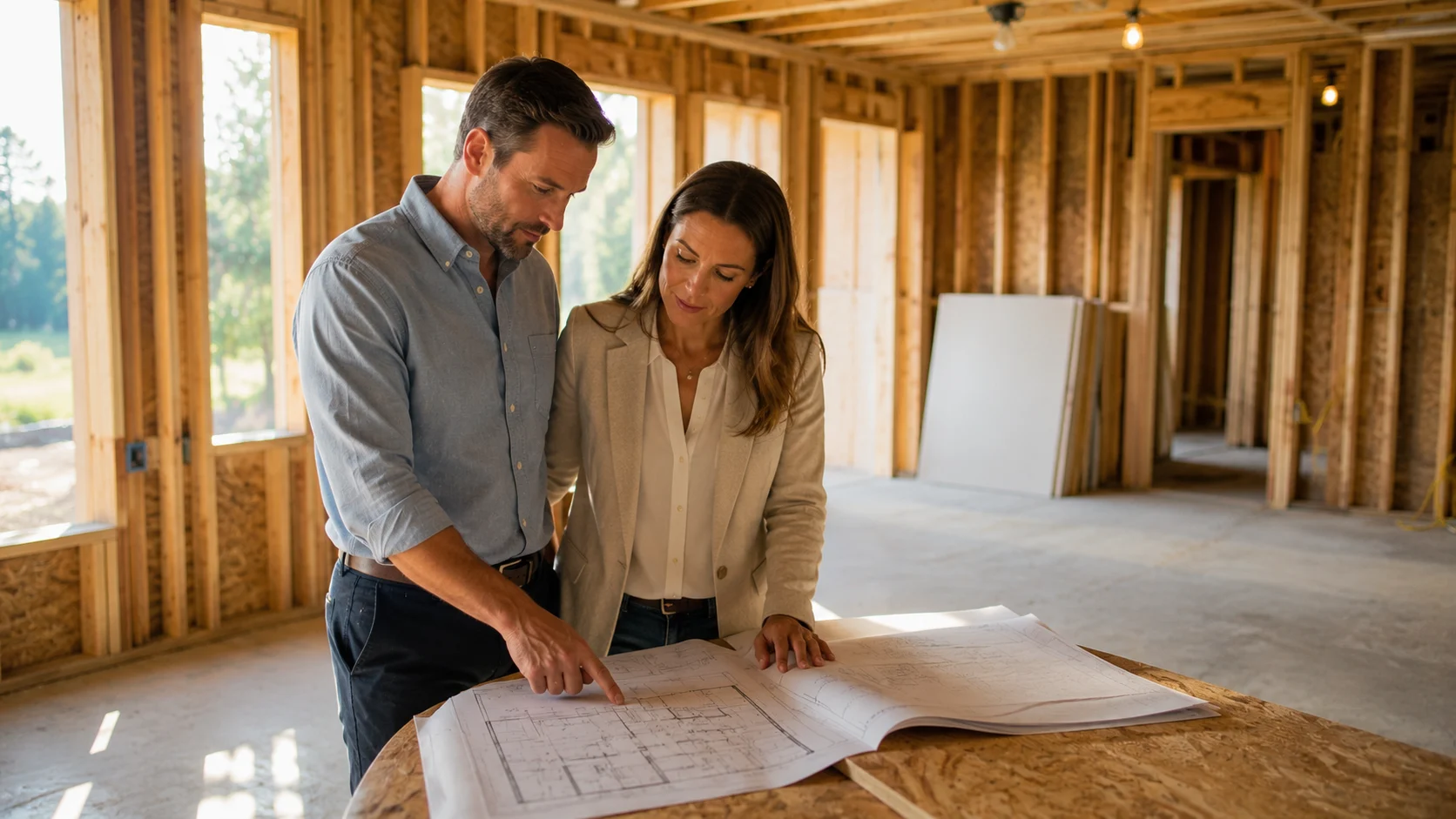
Pre-drywall inspection. Schedule an independent, NC-licensed inspector to walk the home after framing is complete but before the walls are enclosed. This is the only window where you can see the framing, plumbing rough-in, electrical rough-in, and HVAC ductwork directly. Once drywall goes up, those systems are inaccessible without opening walls. Confirm your access window with the builder in writing and have it added to your contract if it isn’t already there.
Final walkthrough inspection. Hire your own inspector again before closing, separate from any builder punch-list walkthrough. Builder representatives are looking at finish quality and items on their checklist. Your independent inspector is looking for things the builder may not be motivated to surface. These are different lists.
Both inspections typically run $300 to $500 each. On a $600,000 purchase, they’re among the best investments you can make. I also advise all of my buyer clients testing for radon as it is a safety issue longterm, and most builders will remediate this issue prior to closing if we test and uncover the issue. But they can’t – and won’t – address it if we don’t test for it and bring it to their attention.
New Construction Pricing in the Triangle: What the Data Actually Says
On paper, new construction costs more. The average new construction home in greater Raleigh is running about $622,000 at $258 per square foot. The average resale home is $543,000 at $251 per square foot. That’s roughly a $79,000 gap.
But that gap looks different once you factor in what you’re actually getting. A new construction home in 2026 comes with builder warranties on major systems, no deferred maintenance, energy-efficient construction standards, and modern floor plans built for today’s lifestyle. You almost certainly won’t be replacing a roof, an HVAC, or a water heater in year three.
In communities where builders are actively competing against resale inventory, like parts of Cary, Apex, Holly Springs, and Johnston County, the real gap after incentives is often narrower than the list price comparison suggests. In neighborhoods where new construction isn’t available, like Inside the Beltline or most of Durham’s established neighborhoods, resale is your only option and it holds its value because of limited supply.
The right choice depends on what you’re buying for. If you want a specific location, mature neighborhood character, or a larger lot, resale wins. If you want modern systems, builder warranties, and want to customize your finish package, new construction is worth the premium, especially right now when builders are actively competing for buyers.
Your specific number, on a specific home, in a specific Triangle community, is going to look very different from any average. That’s exactly where local expertise and current comparable sales data come in.
Frequently Asked Questions
Can I use my own real estate agent when buying new construction in North Carolina?
Yes, and you should. In North Carolina, the builder’s on-site sales representative works for the builder, not you. Bringing your own buyer’s agent costs you nothing extra because Triangle builders typically pay buyer’s agent commissions. The critical rule: bring your agent before you visit any model home or community for the first time, because builders register buyer representation at that initial contact.
Are builder incentives negotiable on new construction in the Triangle?
Yes, especially on inventory homes and near the end of a builder’s fiscal quarter. Standard incentives in the Triangle include 2-1 rate buydowns, $5,000 to $10,000 in closing cost credits (tied to their preferred lender), and design center credits. Price reductions are often more valuable than upgrades because they affect your mortgage payment, property taxes, and long-term equity.
What is a pre-drywall inspection and do I need one for new construction in NC?
A pre-drywall inspection is an independent inspection conducted after framing but before the walls are enclosed, so the inspector can access plumbing, electrical, HVAC, and structural elements directly. It’s one of the most important inspections you can do on a new build. WRAL reported in early 2026 that independent inspections of Triangle new construction were routinely catching issues that buyers missed by relying on builder walk-throughs alone. Schedule it with an independent, NC-licensed inspector and confirm your access window with the builder in writing. I personally schedule and handle this for all of my buyer clients.
How does the NC Due Diligence Fee work when buying new construction?
New construction contracts in the Triangle are almost always the builder’s own contract forms, not the standard NC Offer to Purchase. These contracts favor the builder, and the walk-away flexibility you’d have with a resale purchase often doesn’t apply the same way. You may still pay a due diligence-style deposit, but your rights and timelines are structured by the builder’s contract rather than the NC REALTORS standard form. Having your own agent review the builder’s contract before you sign matters for exactly this reason.
Is new construction more expensive than resale in the Raleigh-Durham Triangle?
On paper, yes. The average new construction home in greater Raleigh runs about $622,000 at $258 per square foot, compared to $543,000 at $251 per square foot for resale. But builder incentives in 2026 are narrowing that gap. Rate buydowns, closing cost credits, and inventory-home pricing can make new construction competitively priced once you factor in builder warranties, no deferred maintenance, and modern construction standards.
Buying new construction in the Triangle right now is a real opportunity, if you go in prepared. The builders who are competing hardest are the ones most willing to work with buyers who come in with representation, do the inspections, and understand the difference between price reductions and upgrade credits.
If you’re considering new construction and want to walk through your specific situation, I’d be glad to have a conversation. I’ve represented buyers across Triangle builder communities from Wendell Falls to Briar Chapel to new construction in Cary and Apex, and I know how these contracts work and where the leverage is. Reach out for a confidential consultation: email me at brandon@theoceanairerealty.com or call or text 910-228-6481 and we’ll find a time to talk through your goals.
Over 90% of my business comes from repeat clients and referrals. That’s not a marketing line. It’s the result of telling people what they need to hear rather than what’s easiest to say, and staying with them through the whole transaction, not just the offer. If you’re serious about buying in the Triangle and you want an agent who’s going to be honest with you about the numbers, the process, and the risks, I’d be glad to earn that trust. Let’s start with a conversation.
About Brandon Yopp
Brandon Yopp is a top-producing REALTOR® with The Oceanaire Realty, serving sellers and buyers across Raleigh, Durham, Chapel Hill, Cary, Apex, and the surrounding Triangle communities in North Carolina. A Triangle resident for more than 20 years, Brandon is known for deep local market knowledge, strategic pricing, expert negotiation, and a marketing approach built to give sellers maximum exposure across the platforms today’s buyers actually use. He’s a multi-year Triangle Real Producers Top 500 honoree and a Certified Luxury Home Marketing Specialist™, guiding first-time buyers, upsizers, downsizers, relocating clients, and investors through the Triangle market with confidence. Over 90% of his business comes from repeat clients and referrals.