What to Look For at Your Final Walkthrough in Raleigh, NC: A Buyer’s Checklist for 2026
The final walkthrough is one of the last checkpoints before you sign your name to a mortgage and get the keys. It is not a courtesy. It is a contractual protection. Most buyers treat it as a formality. That is a mistake.
In North Carolina, the final walkthrough is your last chance to confirm the home you are buying is the home you agreed to buy. Things can and do change between the day you went under contract and the day you close: repairs go undone, appliances disappear, pipes spring leaks, and moving damage shows up in places no one notices until it is too late. This guide covers exactly what to look for, what Form 2-T says about your rights, and what to do if you find something wrong.
What NC Form 2-T Says About Your Final Walkthrough
North Carolina’s standard residential contract, Form 2-T, does not use the term “final walkthrough” in the way many buyers expect. What it does say, in Paragraph 11, is that the seller is required to deliver the property in substantially the same or better condition as on the date of the offer, with all agreed-upon items included, and with reasonable access provided to the buyer before closing.
“Substantially the same or better condition” is the operative standard. It means the seller cannot make the property worse during the contract period, whether through neglect, failed repairs, removal of included items, or damage caused by the move-out process. If you arrive at the final walkthrough and the condition has materially changed, you have legal grounds to delay closing, negotiate a repair or credit, or in clear cases of breach, terminate.
NC REALTORS confirm that sellers must give buyers reasonable access to perform the final walkthrough. As a rule, I always schedule the final walkthrough for my buyers immediately before closing. As an example, we do the final walkthrough at 1 p.m. and then go straight to the attorney’s office for closing at 2 p.m. I do this because I strongly believe checking the property too far in advance of closing allows for last minute problems to present themselves and go unnoticed. I am aware of many situations where agents and clients did a final walkthrough the day prior to closing, only for the buyer client to later discover substantial water intrusion from a heavy rain the night before closing. That would’ve been caught if they had performed the final walkthrough right before closing.
For the full picture of what happens between accepted offer and closing in North Carolina, the post on what happens after your offer is accepted in NC walks through the full timeline including due diligence, attorney scheduling, and the final days before close.
The Final Walkthrough Checklist
Agreed-Upon Repairs
This is the most important item on the list. If your due diligence period produced a repair request or a due diligence repair addendum (Form 310-T), the final walkthrough is when you confirm those repairs were actually completed.
For every repair in the agreement: confirm the specific item was addressed (do not assume); ask for receipts or invoices from the contractor (licensed work should be documented); test the repaired item if testable (turn on the repaired HVAC, run the fixed dishwasher cycle, operate the garage door that was adjusted); and check the quality of the work. A running toilet that was “repaired” but still runs is not repaired.
If repairs were to be completed by a licensed contractor, ask for the contractor’s name and license number. NC requires licensed tradespeople for permitted work. An unlicensed patch on electrical or plumbing is a red flag even if the item appears to function.
HVAC Systems
Run both heat and air conditioning permitted the weather outside allows for safe operation. HVAC systems can fail or be partially disabled between your inspection and closing. Set the thermostat to a temperature that requires the system to turn on and run for at least five minutes. Listen for unusual sounds. Check that air is flowing from the registers. Look at the filter. A filter that was clean at inspection and is now completely clogged suggests the system has been running hard, or that a problem has developed.
Plumbing
Run every faucet for 60 seconds. Check under sinks for drips or new moisture. Flush every toilet. Run the showers. Check the water heater: it should be operating, showing no leaks at the base, and the temperature relief valve should not show signs of recent discharge. Note the age displayed on the unit. If the water heater was near the end of its useful life at inspection and has since failed, that is a material change in condition.
Electrical
Test switches and outlets in each room. A quick test is to plug in a phone charger and confirm it is drawing power before moving on. Check that the breaker panel has not been altered or damaged. If the inspector flagged any electrical issues that were to be repaired, confirm the work was done with a licensed electrician’s documentation.
Appliances Included in the Contract
Every appliance listed on the contract should be present and operational. Refrigerators, washers, dryers, and microwaves go missing between contract and closing more often than buyers expect. Test what you can: run the dishwasher through a cycle, operate the range and oven, run the microwave, and confirm the refrigerator is cooling. A seller who unplugged the refrigerator before the walkthrough may be trying to obscure a compressor problem.
No New Damage from the Move
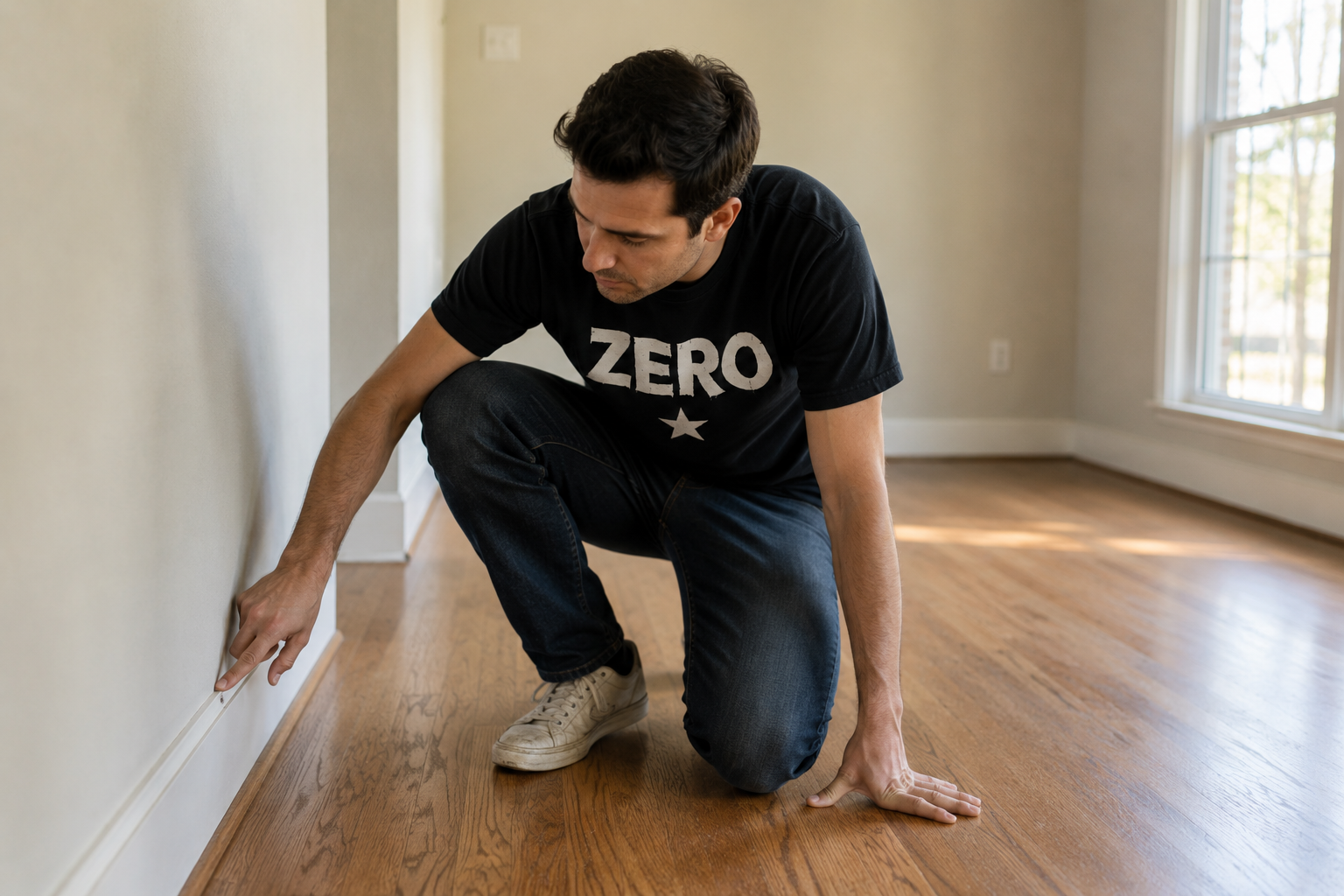
Move-out is when most new damage happens. Look for: scrapes or gouges on hardwood floors from furniture being dragged; holes in drywall from removed TV mounts or shelving brackets; damaged door frames from large furniture exits; stair railings loosened by movers; cracked or broken tile in high-traffic move paths; and any new water staining on ceilings or walls. Document everything with photos.
All Included Items Are Still Present
Review the contract’s personal property section. Anything listed as conveying with the property must be there: window treatments, light fixtures, garage door openers, and any other specified items. Sellers sometimes take fixtures they should not, particularly decorative light fixtures they installed personally. Confirm all garage door remotes and programmed keypads are present and operational.
Windows, Doors, and Locks
Open and close every exterior door and window. They should operate smoothly and latch securely. Check that all entry locks have corresponding keys. Verify that any deadbolts, security keypads, or smart locks are functional.
Smoke and Carbon Monoxide Detectors
NC Building Code requires working smoke detectors in specific locations. Confirm they are present and test them. Some sellers remove battery-operated detectors when moving. If any are missing, flag this item before closing.
The Crawl Space (if applicable)
Wake County and the broader Triangle area have a high proportion of homes with crawl spaces, and moisture issues in crawl spaces are the most common Triangle inspection finding. If the inspector noted any crawl space moisture concerns and repair or remediation was included in the repair agreement, request documentation that the work was completed by a licensed contractor. Even without a repair request, a quick visual check of the vent covers and vapor barrier takes five minutes.
What to Do If You Find Something at the Final Walkthrough
Finding something is not a crisis. It is information. Your options depend on severity:
Minor cosmetic issues (a small wall scuff, a missing garage remote): negotiate a credit or have the seller provide the missing item before closing. Typically handled with a quick conversation between agents.
Failed or incomplete repairs: do not close until the repair is completed or you have received a credit sufficient to cover the repair. Your closing attorney can hold funds in escrow if both parties agree, allowing closing to proceed while the issue is resolved.
Material new damage or missing appliances: this is a potential breach of Paragraph 11. Your agent should document the issue with photos, notify the listing agent immediately, and you should consult with your closing attorney about your options before signing anything.
Significant unresolved problems: you have the right to delay closing. A delay of one to two business days to resolve a clear contract breach is reasonable, though it may affect your rate lock if you are financing. Know your numbers before your walkthrough so you can make this call quickly if you need to.
For buyers who want to understand the full negotiation framework, the negotiating a home purchase in Raleigh NC guide covers credits, repair requests, and your leverage points at each stage of the transaction.
One note on timing: your rate lock and closing date are real constraints. The closing timeline guide for Raleigh NC buyers covers rate lock extension costs and timing details so you know exactly what a one-day delay could cost before you are standing in the kitchen deciding whether to push back.
Frequently Asked Questions
Can a buyer refuse to close if there are problems at the final walkthrough in NC?
Yes, if the problems constitute a material breach of the contract’s condition standard. NC Form 2-T Paragraph 11 requires the seller to deliver the property in substantially the same or better condition as at the time of the offer. If the walkthrough reveals significant new damage, missing appliances that were contracted to convey, or major agreed-upon repairs that were not completed, the buyer has grounds to delay or refuse to close until the breach is resolved. For minor cosmetic issues, closing with a negotiated credit is typically the more practical path.
When does the final walkthrough happen in North Carolina?
As a rule I always schedule my final walkthroughs the day of closing, immediately before going to the attorney’s office. If you check the property a day before closing you are allowing last minute problems to develop without being caught.
What if the seller has not finished moving out by the final walkthrough?
Document this with your agent and request a re-walkthrough as close to closing as possible. You are entitled to a reasonable opportunity to inspect the condition before you sign. A home full of furniture and boxes cannot be properly assessed, and a seller who has not vacated by the walkthrough is creating conditions where new damage can occur between that moment and closing. Your agent should communicate this clearly to the listing agent.
Does the seller have to be present for the final walkthrough in NC?
No. The final walkthrough is typically attended by the buyer and their buyer’s agent, with the listing agent present or available by phone. The seller is not required to attend and usually does not. If specific items need to be demonstrated or explained, sellers sometimes leave written notes or the listing agent facilitates the handoff of relevant information such as appliance manuals, utility contacts, and access codes.
What happens if the buyer skips the final walkthrough?
Buyers who skip the final walkthrough close without the protection it provides. If a repair was not completed, an appliance is missing, or new damage occurred, the buyer has limited recourse after closing because they chose not to inspect before signing. Sellers can argue that the buyer accepted the condition of the property at closing. The final walkthrough is a contractual right under NC Form 2-T — exercise it every time.
Do not treat the final walkthrough as a checkbox. It is the last protected moment before you own the home. Go in with this checklist, document what you find with photos, and do not let closing-day excitement rush you past something that matters. To talk through your specific transaction and timeline before your walkthrough, email brandon@theoceanairerealty.com or call or text 910-228-6481.
About Brandon Yopp
Brandon Yopp is a top-producing REALTOR® with The Oceanaire Realty, serving sellers and buyers across Raleigh, Durham, Chapel Hill, Cary, Apex, and the surrounding Triangle communities in North Carolina. A Triangle resident for more than 20 years, Brandon is known for deep local market knowledge, strategic pricing, expert negotiation, and a marketing approach built to give sellers maximum exposure across the platforms today’s buyers actually use. He’s a multi-year Triangle Real Producers Top 500 honoree and a Certified Luxury Home Marketing Specialist™, guiding first-time buyers, upsizers, downsizers, relocating clients, and investors through the Triangle market with confidence. Over 90% of his business comes from repeat clients and referrals.