Home Staging Costs in Raleigh, NC: What Sellers Pay and Whether It’s Worth It in 2026
Sellers in Raleigh ask about staging costs constantly, and the answer is almost always: it depends on what you mean by staging. There is a wide range of services that fall under that word, and choosing the right tier makes a real difference in both your cost and your outcome.
I’ve helped countless sellers in Raleigh and the greater Triangle assess their staging options prior to listing, ultimately guiding them to arrive at the option that best worked for their specific budget, property, and situation.
Here’s how to think about it clearly.
The Three Tiers of Staging (and What Each Costs in Raleigh)
Tier 1: Staging Consultation Only ($350 to $500)
A professional stager walks your home for roughly two hours, gives you specific room-by-room feedback, and hands you a written action list. You do the work yourself: rearranging furniture, editing out personal items, improving lighting, adding small accessories. This is the lowest-cost option and makes the most sense for sellers with well-maintained homes who just need a trained eye.
In Raleigh, two-hour consultations from local stagers typically run $350 to $500 and include a written staging report. Some local stagers charge by the hour ($150 to $250 per hour) rather than a flat fee.
Tier 2: Occupied Home Staging ($1,500 to $3,000)
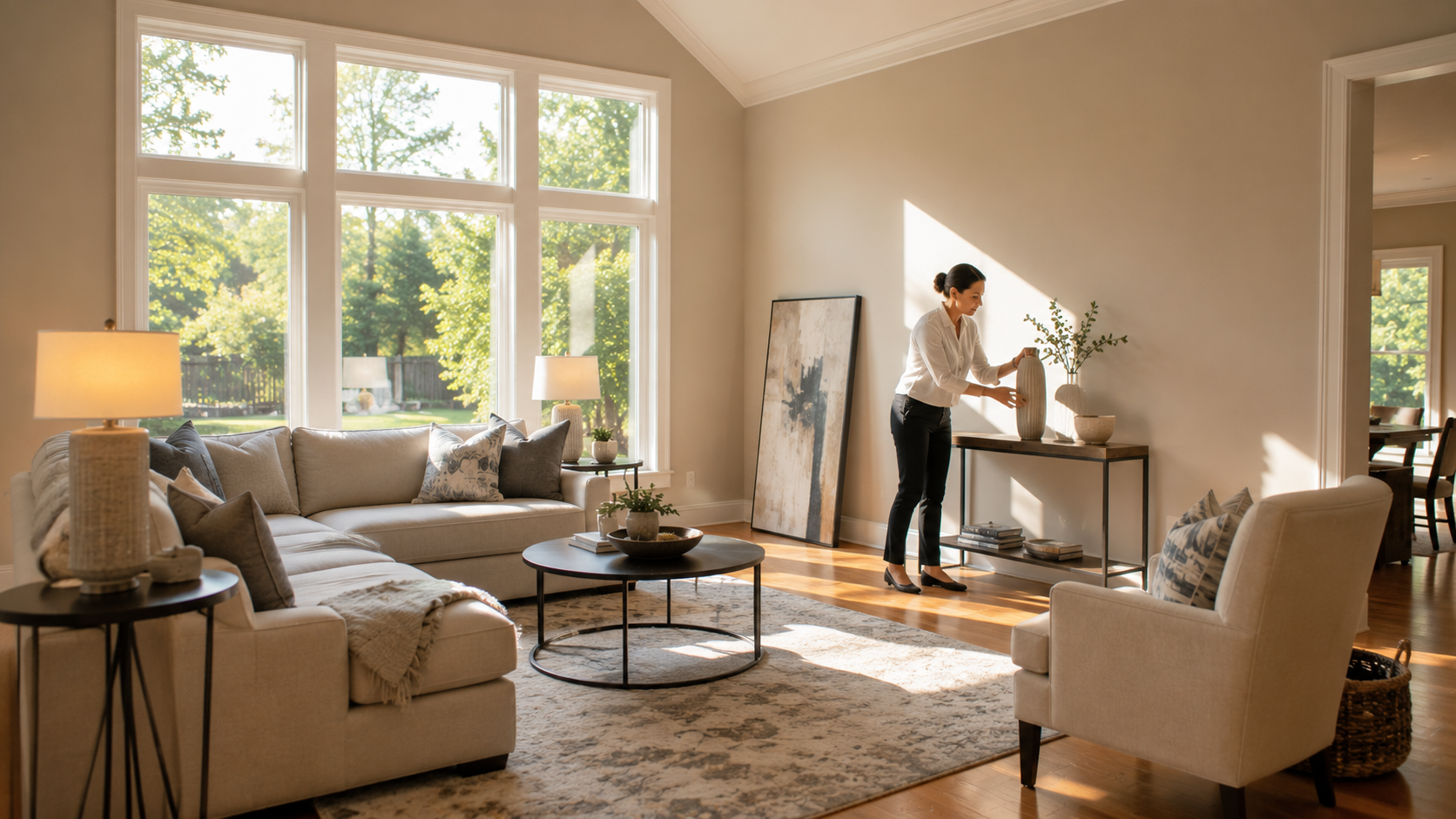
You are still living in the home. A stager comes in, rearranges your existing furniture, edits down surfaces and accessories, adds small rental accents, and stages the key rooms for photography and showings. This can be an easy option for Raleigh sellers and often delivers strong results without the cost of bringing in all-new furniture, however several of the top-tier stagers in our market will not service occupied properties so there are fewer vendors to choose from.
Expect to pay $1,500 to $3,000 for a flat-fee occupied staging service in the Triangle market. This typically covers the living room, primary bedroom, and kitchen at minimum.
Tier 3: Vacant or Full Staging ($3,500 to $7,000+)
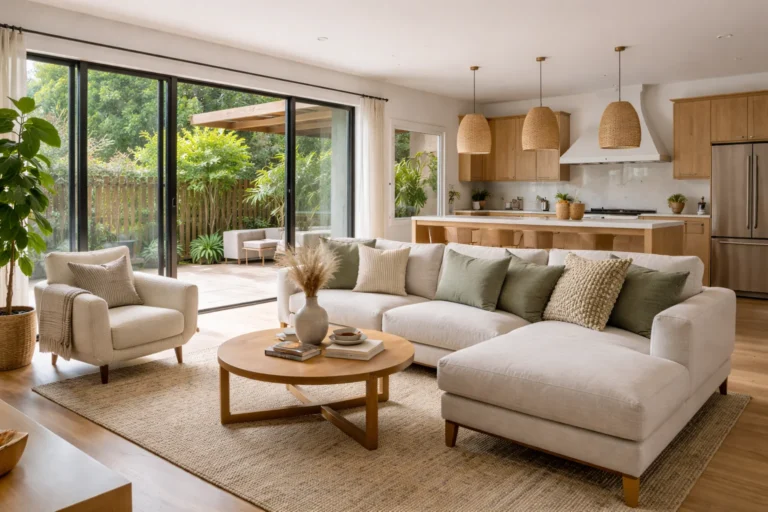
The home is empty. A stager brings in rented furniture, artwork, rugs, and accessories to fully furnish the key living spaces. The cost covers a delivery fee, the initial staging, and a monthly furniture rental period. A roughly 30-day rental of staged furnishings in a Triangle home typically runs $3,500 to $4,500 for partial staging (kitchen, main living area, primary bedroom and bathroom, accent furnishings in all other bathrooms) and $5,000 to $7,000+ for full-home staging.
Costs extend if the home does not sell within the initial rental period and the client wishes for the staging to remain in place. Budget for renewals at 10 to 25% of the initial cost per additional month.
Virtual Staging: The Digital Shortcut ($35 to 50 per image)
Virtual staging uses software to digitally furnish photos of an empty room. It is far less expensive than physical staging and works well for online listings. The limitation is that what buyers see online is not what they see when they walk in. For vacant properties where in-person showings are likely, consider at least partial physical staging of the primary living spaces.
The virtual staging options now are lightyears better than in prior years due to improvements in the technology, however most of the time they are still clearly digital alterations and potential buyers can be underwhelmed if they schedule a showing and see an empty property when they open the door.
In my opinion, many agents and sellers are taking virtual staging way too far. As an example, I would argue that altering a photo of a backyard to show “what it may look like” with a swimming pool added after the fact is a disingenuous usage of virtual staging, especially when the listing and associated photo does not make it explicitly clear that the image is a virtual rendering and no pool is currently in place. This happens more often than you might think, even in this market.
What Raleigh Buyers Actually Notice First
Real estate staging research is consistent across multiple studies: first impressions are formed within seconds, and the rooms that create them are predictable.
According to the NAR’s 2025 staging data, the most commonly staged rooms are the living room (91% of agents), primary bedroom (83%), and dining room (69%). The kitchen and primary bathroom matter too, but they are often more about cleanliness and editing than bringing in new pieces.
For Raleigh sellers, curb appeal has a disproportionate effect on whether buyers walk inside engaged or skeptical. The repairs that matter most before listing in Raleigh are closely related to staging prep: patching, painting, and cleaning before anything is staged or photographed.
When Staging Pays Off in Raleigh
Staging has a clearer ROI case in some situations than others.
Worth the investment when: the home is in a price segment where competition is active ($450K to $800K in 2026); the home has been on the market 30 or more days without an offer; the home is vacant; comparable homes that have sold recently were staged; or the seller has time before listing to implement consultation recommendations themselves.
Lower urgency when: the home is well-maintained and currently furnished with a cohesive style; the price point is below $375K where inventory is still thin; or the seller is already receiving strong pre-listing interest.
The context of the 2026 Triangle market matters here. With Wake County inventory up more than 20% year over year and days on market rising across most price segments, presentation matters more now than it did in 2021 through 2023. Homes that look polished online are getting more showing requests. Homes that look cluttered or dark are getting passed over.
For a full picture of what comes out of your sale after all costs, the seller net proceeds breakdown for Triangle homeowners covers closing costs, commissions, and fees in detail.
The Staging Decision in Context: Price, Condition, and Market Segment
Staging is most effective when paired with accurate pricing from the start. A staged home priced above market will still sit. A fairly priced home that is clean and shows well will often outperform a beautifully staged home that is overpriced.
The practical question for most Raleigh sellers is not “full staging or no staging” but “what level of staging makes sense for my situation?” For occupied sellers with typical Triangle homes in the $450K to $800K range, a professional consultation combined with intentional pre-listing prep usually captures most of the staging benefit at a fraction of the full-service cost.
A pre-listing inspection can also inform the staging strategy: knowing what the inspector will find lets you address those items before buyers ever walk in, which changes the conversation during the due diligence period significantly.
Frequently Asked Questions
How much does home staging cost in Raleigh NC?
Home staging in Raleigh ranges from $350 to $500 for a consultation-only service to $3,500 to $7,000 or more for partial or full vacant staging with rented furniture. Occupied home staging, where a stager works with your existing furniture, typically runs $1,500 to $3,000. The right tier depends on your home’s condition, whether it is occupied or vacant, and how competitive your price segment is in the current Triangle market. A conversation with a local stager or a listing agent can help you decide which level makes sense before you commit.
Is home staging worth it for sellers in Raleigh NC?
Yes, for most sellers in Raleigh’s mid-range price segment, some form of staging is worth the investment. According to NAR’s 2025 Profile of Home Staging, 49% of sellers’ agents report fewer days on market for staged homes, and 29% saw a 1% to 10% increase in the offer price. In the current Wake County market, where inventory has risen more than 20% year over year and buyers have more options, a well-staged home gets more online engagement, more showing requests, and typically stronger initial offers. The question is not whether to stage but which tier of staging fits your situation.
What rooms should I focus on when staging my Raleigh home?
Focus first on the living room, primary bedroom, and kitchen. These are the rooms that buyers photograph, remember, and evaluate most heavily when deciding whether to make an offer. According to NAR staging data, 91% of agents stage the living room, 83% stage the primary bedroom, and 69% stage the dining room. In Raleigh-area homes, the main living area and the primary suite have an outsized effect on how buyers perceive the overall home, especially in the $500K to $800K range where buyers are comparing multiple options.
Does staging help sell my home faster in Raleigh?
Yes, staged homes typically spend fewer days on market than unstaged ones. The improvement is most pronounced for vacant homes and for homes in competitive price segments where buyers have real alternatives. In the current Raleigh market, where homes above $625K are taking longer to sell and buyers are doing more comparisons before committing, staging is one of the clearest ways to differentiate your listing in online photos and during in-person showings. A home that shows well creates urgency; one that looks cluttered or dated invites hesitation.
Can I stage my own home without hiring a professional stager?
Yes, especially if you start with a paid consultation. Most professional stagers offer one-time walk-through sessions where they give specific feedback and a written action list for you to implement. This approach captures most of the benefit of full staging at a fraction of the cost. The key is following through on the action list completely, including editing out personal items like family photos and religious symbols that personalize the space for you but can make it harder for buyers to picture themselves living there.
About Brandon Yopp
Brandon Yopp is a top-producing REALTOR® with The Oceanaire Realty, serving sellers and buyers across Raleigh, Durham, Chapel Hill, Cary, Apex, and the surrounding Triangle communities in North Carolina. A Triangle resident for more than 20 years, Brandon is known for deep local market knowledge, strategic pricing, expert negotiation, and a marketing approach built to give sellers maximum exposure. He is a multi-year Triangle Real Producers Top 500 honoree and a Certified Luxury Home Marketing Specialist. Over 90% of his business comes from repeat clients and referrals. Reach him at brandon@theoceanairerealty.com or 910-228-6481 to schedule a confidential consultation.