Seller-Paid Rate Buydowns in Raleigh NC: How a 2-1 Buydown Works and When to Ask for One
If you have been shopping for a home in Raleigh this spring, you have probably heard the phrase “seller-paid buydown” come up. Builders in Wendell, Fuquay-Varina, Apex, and other communities across Wake County are advertising them. Resale sellers on homes sitting 30 or 40 days are starting to offer them as an alternative to dropping the price.
They sound complicated. They are not.
Here is exactly how they work, what the math looks like on a real Raleigh purchase, and how to negotiate for one without derailing the deal.
What a 2-1 Buydown Actually Is
A 2-1 buydown is a temporary interest rate reduction funded by the seller at closing.
Your loan is written at the full note rate, which is whatever rate you qualified for. But the seller deposits a lump sum into a buydown escrow account, and your lender draws from that account each month to cover the difference between your reduced payment and the payment your full rate would require.
Here is how the rate schedule works:
- Year 1: Your rate is reduced by 2 percentage points
- Year 2: Your rate is reduced by 1 percentage point
- Year 3 and beyond: Your rate returns to the full note rate
It is temporary. It is funded upfront. And if you refinance before the buydown period ends, any unused funds in the escrow account come back to you as a principal reduction — they do not disappear.
This is different from buying permanent discount points, which reduce your rate for the life of the loan. A 2-1 buydown is designed to lower your payment during the first two years, which is typically when cash flow is tightest for buyers.
The Math on a Raleigh Home
Here is a worked example using current Raleigh market numbers.
Purchase price: $450,000
Down payment: 10% ($45,000)
Loan amount: $405,000
Note rate: 6.5%
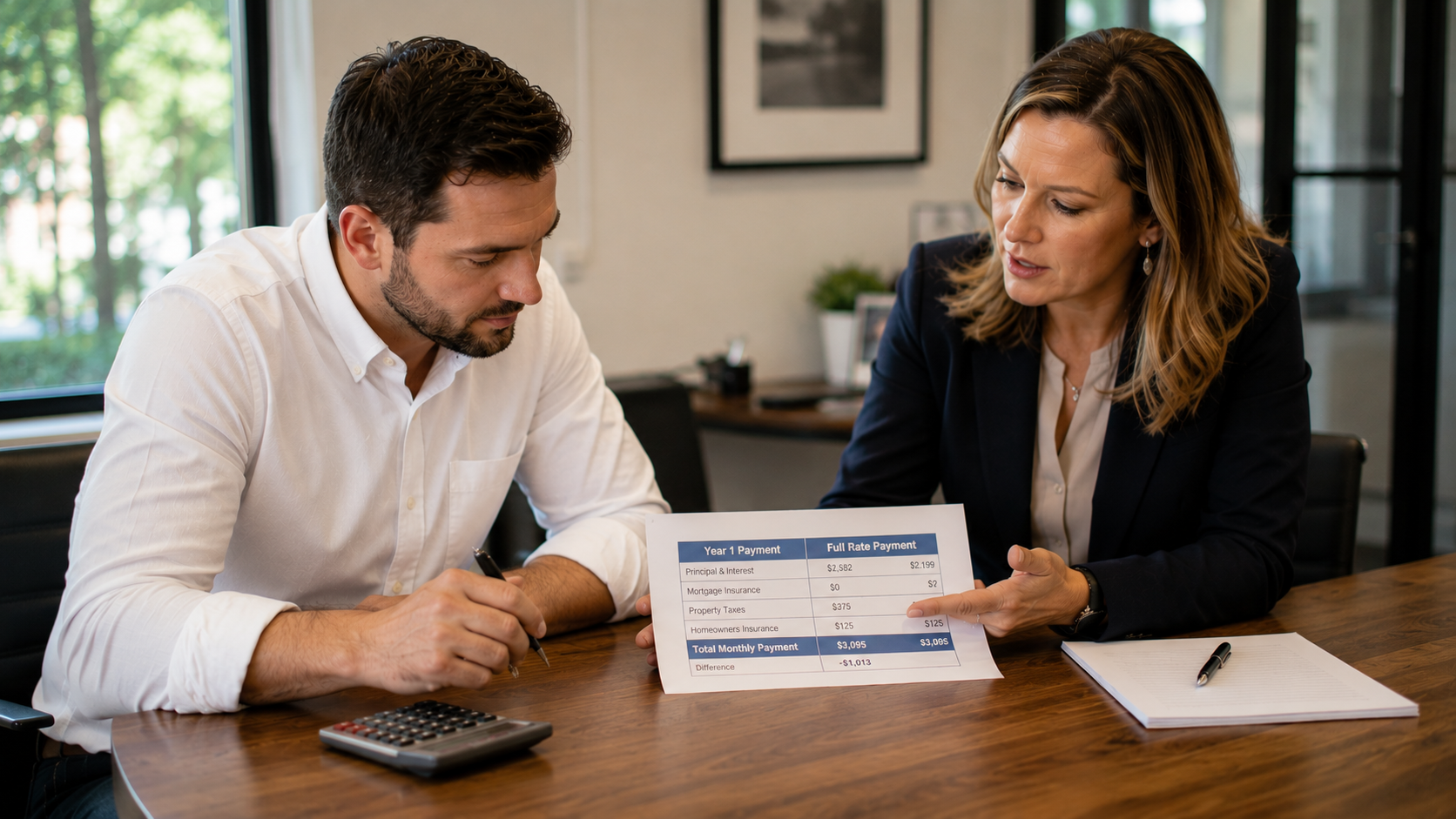
Without a buydown, your principal and interest payment at 6.5% is approximately $2,560 per month.
With a seller-paid 2-1 buydown:
- Year 1 rate: 4.5% — Payment: approximately $2,051/month — savings of $509/month
- Year 2 rate: 5.5% — Payment: approximately $2,299/month — savings of $261/month
- Year 3+: 6.5% — Full payment resumes
Total interest savings over the two years: approximately $9,240.
Cost to the seller to fund this buydown: approximately $9,300 to $9,500.
Now compare that to a price reduction. If the seller cut the price by $9,500 instead, your monthly savings would be roughly $57 per month — about $680 per year. The same dollars produce more than 13 times the monthly relief when structured as a buydown instead of a price cut.
This is why buyers and sellers are both increasingly interested in this structure. The seller gets to preserve their headline price. The buyer gets real, meaningful payment relief during the years when it matters most.
Why Sellers Are Offering Buydowns Instead of Price Cuts
About 47% of Raleigh resale closings in early 2026 include some form of financial concession. Sellers with listings that have been sitting for 30 or 40 days are looking for ways to attract buyers without publicly dropping their price.
A price reduction is visible. It gets timestamped on Zillow. It signals to every buyer watching the listing that something changed, and it often invites lower offers on top of the reduced price.
A seller-paid buydown is structured differently. It is a seller concession — a line item at closing — not a public price reduction. The seller holds their list price, the buyer gets a structurally better deal, and the transaction moves forward without either side feeling like they lost.
Builders have been using this approach for years. In 2026, it is becoming increasingly common on resale homes across Cary, Apex, Wake Forest, and North Raleigh — particularly on homes that have been on the market longer than the neighborhood average.
One thing worth knowing: if you are buying new construction in the Raleigh area, builders are often funding 2-1 buydowns through their in-house lending partners. This can look attractive, but make sure you are comparing the buydown offer against what an independent lender could offer on the same loan. The post on buying new construction in the Triangle covers that dynamic in detail.
How to Ask for One and When You Have Leverage
The best time to request a seller-paid buydown is in your initial offer, not after you are already under contract.
Sellers are more receptive to buydown requests when:
- The home has been on the market for 21 or more days
- There are no competing offers on the table
- The list price is at or near the top of the recent comparable sales range
- You can demonstrate you are a serious, pre-approved buyer
How you frame the request matters. Rather than asking the seller to “pay down your rate,” ask for a seller contribution toward financing costs — specifically, a 2-1 temporary rate buydown funded through closing. This language is cleaner and less confrontational. The seller can see it as a closing cost credit with a clear structure, not an open-ended concession.
Your lender should calculate the exact buydown cost before you write the offer. You want the precise dollar figure you are requesting as a seller concession so there is no ambiguity in the contract.
A few practical limits to keep in mind:
- Conventional loans with less than 10% down: Seller concessions capped at 3% of purchase price
- Conventional loans with 10% to 25% down: Seller concessions capped at 6%
- FHA loans: Seller concessions capped at 6% of the lesser of sale price or appraised value
Make sure the buydown cost plus any other concessions you are requesting stays within your loan type’s limit. Your lender will confirm this.
One honest note on timing: A 2-1 buydown works best if you plan to stay in the home at least through year two. If you expect to refinance within 12 to 18 months, the math shifts — you may not capture the full year-two savings. That said, if you do refinance and there are unused funds in the buydown escrow, they come back to you as a principal paydown rather than being forfeited, which softens the downside.
For a complete picture of what you will owe at closing beyond the buydown, the post on how much closing costs are for buyers in the Triangle walks through every line item.
Frequently Asked Questions
What is the difference between a 2-1 buydown and a 1-0 buydown?
A 2-1 buydown reduces your rate by 2% in year one and 1% in year two before returning to the full note rate in year three. A 1-0 buydown (also called a 1-1 buydown) reduces your rate by 1% for the first two years only. The 1-0 structure is less expensive for the seller — typically costing around 2 points versus 2.5 points for the 2-1 — which can make it easier to negotiate. The tradeoff is smaller monthly savings in year one.
Who pays for the buydown — the buyer or the seller?
In most Raleigh transactions in 2026, the seller funds the buydown as a concession at closing. Builders and lenders can also contribute, though lender-funded buydowns may affect other loan terms. When negotiating, you request the buydown as a seller concession in your offer; the seller is not required to agree, but in a market where 47% of closings already include financial concessions, it is a reasonable ask on a well-positioned home.
What happens to the buydown funds if I refinance early?
If you refinance before the buydown period ends, the remaining balance in the buydown escrow account is applied to your loan as a principal reduction. The funds do not disappear. This means that even if rates drop and you refinance at month 18, you still benefit from a lower loan balance going into the new loan.
Can I use a 2-1 buydown with an FHA loan?
Yes. FHA loans allow seller concessions of up to 6% of the lesser of the sale price or appraised value, which is typically enough to cover a 2-1 buydown cost. The buydown contribution counts toward your total seller concession limit, so make sure no other concessions push you over the 6% cap. Confirm the exact structure with your lender before finalizing your offer.
Is a 2-1 buydown better than asking for a lower price?
In most cases, dollar for dollar, a seller-funded 2-1 buydown delivers significantly more monthly payment relief than an equivalent price reduction. A $9,000 price cut saves roughly $54 per month on your mortgage. A $9,000 seller-funded buydown can save $400 to $500 per month in year one alone. If cash flow in the first two years of ownership is your primary concern, the buydown almost always wins. If you are more focused on a lower long-term loan balance and expect to refinance quickly, the price reduction may serve you better.
In Raleigh’s 2026 market, a seller-paid rate buydown is one of the most effective tools available to buyers — particularly on homes that have been sitting for a few weeks and where sellers are already open to negotiation. The key is knowing how to structure the ask, having your lender run the numbers first, and making the request in the initial offer rather than as an afterthought.
If you are preparing to make an offer on a Raleigh, Cary, Apex, Durham, Chapel Hill, or Wake Forest home and want to talk through whether a buydown makes sense for your situation, I am happy to walk through the math with you. Reach out for a confidential consultation via email at brandon@theoceanairerealty.com or call or text 910-228-6481 and we will find a time.
About Brandon Yopp
Brandon Yopp is a top-producing REALTOR® with The Oceanaire Realty, serving sellers and buyers across Raleigh, Durham, Chapel Hill, Cary, Apex, and the surrounding Triangle communities in North Carolina. A Triangle resident for more than 20 years, Brandon is known for deep local market knowledge, strategic pricing, expert negotiation, and a marketing approach built to give sellers maximum exposure across the platforms today’s buyers actually use. He’s a multi-year Triangle Real Producers Top 500 honoree and a Certified Luxury Home Marketing Specialist™, guiding first-time buyers, upsizers, downsizers, relocating clients, and investors through the Triangle market with confidence. Over 90% of his business comes from repeat clients and referrals.